
TL;DR · 30-second read
The Short Version
A small town on Cayuga Lake in upstate New York is preparing a law that would ban data centers, the warehouse-sized buildings full of computers that run websites, apps and artificial intelligence.
The trigger is a company called TeraWulf, which wants to build one on the grounds of an old coal power plant. About 200 people packed a town meeting, and most asked for a ban, citing noise, water and electricity bills.
New York has temporarily paused some state permits for large data centers. A town ban would be different: it would stay in place until a future town board chose to reverse it.
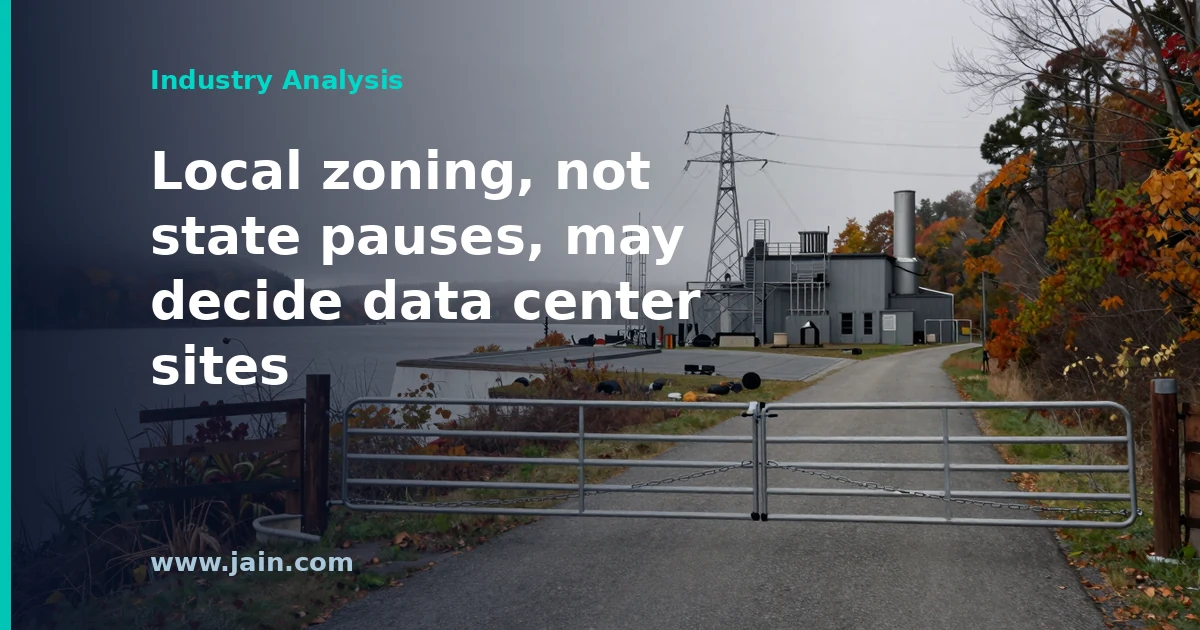
The Town of Lansing, New York, has moved toward an outright prohibition on data centers, Fingerlakes1.com reported. At a September 29 special meeting attended by roughly 200 people, the Town Board directed town attorney Megan Doherty to draft a local law banning data centers, so board members can review the language before deciding whether to formally introduce it and schedule a public hearing. No ban has been enacted and the town’s zoning has not changed.
The debate centers on TeraWulf’s Lake Hawkeye proposal to redevelop the former Milliken power plant site, which has been under town review for nearly a year. Town Supervisor Ruth Groff said she favors a total ban, and several other board members said they want to see prohibition language drafted rather than pursue another temporary moratorium. TeraWulf asked the town to keep its existing review process open.
Executive Summary
Lansing’s board has not rejected TeraWulf’s project, but it has shifted the question from how to regulate data centers to whether to allow them at all. The catalyst was New York Governor Kathy Hochul’s Executive Order 62, issued July 14, which bars the state Department of Environmental Conservation from issuing discretionary permits for data centers of 50 megawatts or more until the state Department of Public Service completes a broader environmental review. That state pause does not halt local reviews, leaving Lansing to spend money and staff time on a project whose state requirements may later change.
The significance reaches beyond one proposal. Town officials said nearly 40 New York municipalities have adopted data center moratoriums since the start of 2026. A moratorium buys time; a zoning prohibition closes a town to every developer until it is amended. If Lansing follows through, a former power plant site with concentrated high-voltage transmission lines, the kind of grid access large facilities seek, would be off the table regardless of who proposes to build there.
For developers, utilities and landowners holding retired generation sites, the episode shows that grid access and a willing seller do not settle siting. Local land-use law, set by a handful of elected board members, can decide the outcome before any state standard is written.
A Temporary State Pause, a Potentially Lasting Local Ban
Executive Order 62 is, by design, a holding pattern. It stops one state agency from issuing discretionary permits for data centers of 50 megawatts or more (a megawatt is a unit of electrical capacity; facilities at that scale draw power comparable to a sizable town) until regulators study electricity demand, water use and quality, air quality, noise and effects on disadvantaged communities. In parallel, Empire State Development has been told to build a framework to help municipalities negotiate economic benefits and mitigate harms. Both tracks point toward data centers being permitted under higher standards, not excluded.
Lansing’s draft points somewhere else. A zoning prohibition does not wait for state standards and does not depend on project size unless the town writes it that way. Doherty told the board a future board could amend the zoning if technology, circumstances or state law change, so the ban would not be permanent in a legal sense. In practice, though, reversing a ban requires a new political decision, while a moratorium expires on its own. That asymmetry is why the local layer now carries more durable risk for developers than the state pause that drew the headlines.
The figure town officials cited, nearly 40 New York municipalities adopting moratoriums this year, shows how many local governments are already using land-use tools to respond. Lansing does not by itself establish that those towns will move on to bans. It does show the path exists, and that a board can travel it in a single meeting once the cost of continued review looks higher than the cost of saying no.
Why Regulating Looked More Expensive Than Prohibiting
The board’s reasoning was largely practical. Members discussed allowing smaller facilities while barring hyperscale ones, the very large campuses typically built for major cloud and computing tenants, with a 10-megawatt threshold raised as one possible dividing line. Groff was skeptical, citing concern that permitting smaller facilities could give developers an opening to seek variances for larger ones. Other members questioned whether an elaborate regulatory structure would invite years of enforcement disputes and legal bills.
Councilmember Judy Drake, who spent much of the meeting weighing economic development and the town’s tax pressures, framed the cost question directly: if most of the board ultimately supports a ban, paying attorneys to draft a moratorium and regulations first may only spend more town money before arriving at the same result. Councilmember Joseph Wetmore said he had spent about a year looking for regulations that could make a data center compatible with Lansing and found that balance increasingly remote.
That logic matters for the industry because it does not turn on any single project’s merits. A small town weighing enforcement capacity and litigation exposure may conclude that a bright-line prohibition is cheaper to administer than performance standards for noise, light and water, especially while state rules are still being written.
The Grid-Ready Brownfield Problem
The Milliken property illustrates the trade-off. Town planning staff described it as a significant brownfield, meaning previously industrial land with contamination of varying degrees. A large coal ash pile remains a state-regulated landfill regardless of what happens elsewhere on the parcel, and other areas may need remediation before reuse. What the site has in its favor is infrastructure: high-voltage transmission lines are concentrated in northern Lansing around the former plant, which is why energy-related developers find it attractive.
Planning staff said parts of the site could potentially host solar, with state brownfield programs helping fund cleanup. Tompkins County Legislator Mike Sigler argued that TeraWulf’s project had been anticipated to generate about $10 million in taxes and other community funding, much of it benefiting the Lansing school district, and that the site could stay dormant without an industrial developer willing to take on the brownfield. Town officials did not adopt those estimates, so the economic case on both sides remains unquantified on the public record.
TeraWulf’s position is a process argument. Pace Rally, its vice president of project development, said the company has done substantial additional technical work and is making meaningful changes to the site plan, and asked that the project be evaluated on the facts. A ban would end that evaluation. The release also notes the prospect of a legal fight over a project already under review for nearly a year, which is the clearest near-term risk for both the town and the company.
Background
Lansing is a town in Tompkins County on the east shore of Cayuga Lake in New York’s Finger Lakes region. The former Milliken Station, a coal-fired power plant, has sat dormant since it closed, leaving behind contaminated land, a regulated coal ash landfill and a concentration of high-voltage transmission infrastructure in the town’s north end.
TeraWulf is a publicly traded digital infrastructure company that operates in New York and has been associated with bitcoin mining and computing facilities that depend on large, low-cost power supplies. Statewide, data centers have come under heavier scrutiny in 2026: dozens of municipalities have adopted moratoriums, and Governor Hochul’s Executive Order 62 paused certain state permits for large facilities while New York develops higher standards for the industry. Source: Lansing moves toward data center ban as TeraWulf debate reaches turning point (Fingerlakes1.com), reporting on the Lansing Town Board’s September 29 special meeting on TeraWulf’s Lake Hawkeye proposal.Sources