
TL;DR · 30-second read
The Short Version
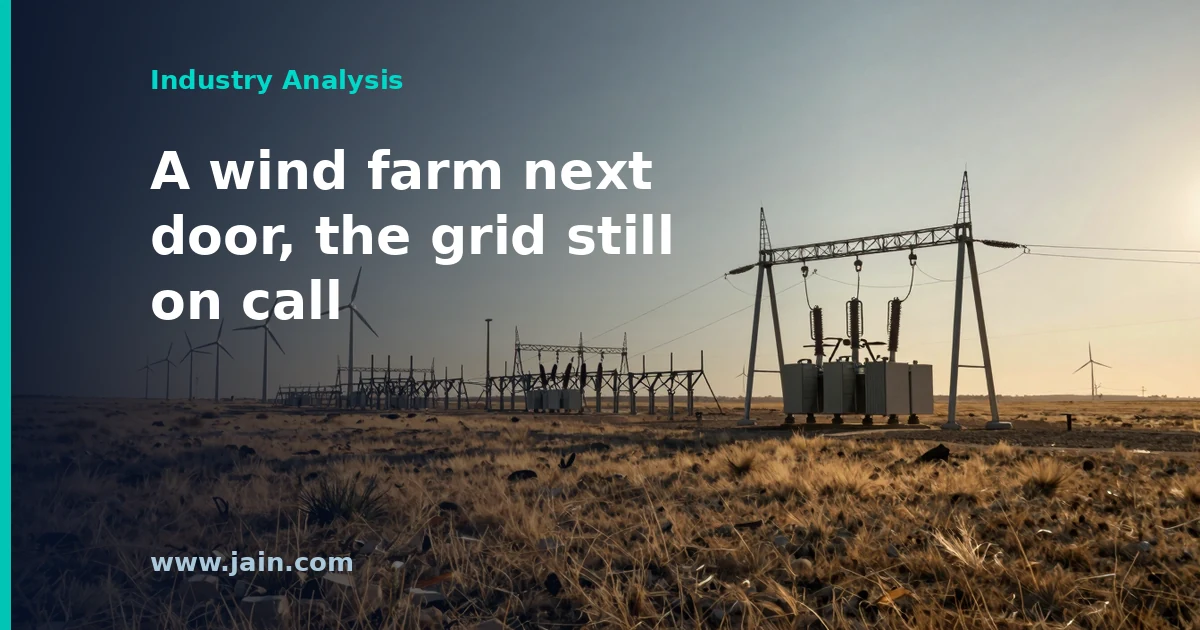
Two companies plan to build a large artificial intelligence computing center in rural Texas, right next to a wind farm. The computers alone would use about as much electricity as a small city.
At its peak, the wind farm can produce three times what those computers need. Even so, the plan also draws from the regular electric grid, because the wind does not always blow and these machines run around the clock.
The deal is not final. It still needs a local tax-break vote, and the likely first tenant, a company mostly owned by one of the partners, has signed only a non-binding promise.
Soluna Holdings (Nasdaq: SLNH) and Applied Digital (Nasdaq: APLD) have signed a definitive agreement to form a jointly owned company that will develop a planned 50 megawatt (MW) critical IT data center for artificial intelligence (AI) and high-performance computing (HPC) at Project Dorothy 3. The site is near Silverton in Briscoe County, Texas, next to the 150 MW Briscoe Wind Farm. Applied Digital will hold 51% and Soluna 49%. Soluna disclosed the agreement in an 8-K filed October 21, 2026.
Soluna is contributing a ground sublease with an attributed value of $18.75 million. Applied Digital is contributing $19,515,306 in cash, less credits for development work and long-lead equipment it pays for before closing. ChronoScale, a publicly traded AI compute company majority-owned by Applied Digital, has signed a non-binding letter of intent to lease the facility. Closing depends on a Briscoe County tax abatement vote and other conditions. The 8-K sets an outside date of December 1, 2026.
Executive Summary
The headline pitch is a wind-powered AI data center. The filed detail is more specific and more instructive. Soluna’s press release says Phase 1 of Dorothy 3, the full 50 MW of critical IT load, is expected to draw power from both Briscoe Wind and the grid, subject to definitive documentation. The wind farm’s nameplate rating is three times the planned IT load, and the design still includes a grid connection. That is the operational lesson here. Co-locating AI compute at a renewable site can change where the power comes from and what it costs. Based on what has been disclosed, it does not remove the need for grid power that is available around the clock.
The deal’s structure also prices Soluna’s long-standing thesis. CEO John Belizaire said the constraint in AI “is energy access, not chips.” In the joint venture, Soluna contributes land and power-related assets valued at $18.75 million for 49%. Applied Digital contributes cash at exactly the same per-point price for 51%, which implies a starting equity value of about $38.3 million for the project company.
Several things remain open. The likely tenant is an Applied Digital affiliate whose commitment is non-binding. Power agreements, the operating agreement and leases are all conditions to closing. Construction financing for a facility of this size has not been described.
Three Times the Wind, and a Grid Connection Anyway
The “50 MW” in this announcement is critical IT capacity. That is the power reserved for servers and accelerators, before cooling and other facility overhead, so the whole site will draw more than 50 MW. The neighbouring Briscoe Wind Farm is rated at 150 MW, three times that IT figure. On paper, that looks like more than enough. A nameplate rating, however, is what a wind farm produces at full output. Actual output rises and falls with the weather. AI training and inference clusters run close to continuously, and their operators expect power whenever the hardware is switched on.
That gap explains why Soluna’s press release says Phase 1 is expected to draw power from both Briscoe Wind and the grid. The grid is what turns a weather-dependent supply into a dependable one. In this design, co-location delivers a source of energy that sits beside the load and may be cheaper and lower-carbon. Reliability still comes from the wider network. For renewable developers pitching their sites to AI tenants, this is a useful reference point. A wind farm can anchor an AI campus, but the campus still needs a grid connection sized to cover the hours when the turbines fall short.
The terms that would show how much of the load each source carries are not yet set. “Power agreements” are listed among the conditions to closing. Until they are signed, the split between wind and grid supply, the pricing, and any backup arrangements remain undetermined.
Putting a Price on a Powered Site
The 8-K turns Belizaire’s “energy access, not chips” argument into a number. Soluna’s contribution is a ground sublease to the project company’s subsidiary, along with a holding company carrying power-related project assets. It receives 49% of the venture for an attributed value of $18,750,000. Applied Digital receives 51% for $19,515,306 in cash. The two figures match to the dollar on a per-percentage-point basis, which values the project company at roughly $38.3 million at formation.
Two points follow. First, a land position with power next to generation is being treated as an asset worth almost as much as the cash partner’s entire contribution. Soluna has said for years that this kind of site is the scarce input. Second, Applied’s cash is an equity contribution at formation, not a construction budget. It is also reduced dollar for dollar by money Applied spends before closing on site development and long-lead equipment. That credit suggests procurement of gear with long delivery times is meant to start before the deal closes, which matters in a market where electrical equipment lead times often set the schedule.
An Anchor Tenant From Within the Same Group
The demand signal comes from ChronoScale (Nasdaq: CHRN), which has signed a non-binding letter of intent for a triple-net lease. Under a triple-net lease, the tenant pays property taxes, insurance and maintenance on top of rent. ChronoScale is majority-owned by Applied Digital. Applied Digital would therefore hold the controlling stake in the landlord venture and also majority-own the prospective tenant.
This arrangement is common in vertically integrated infrastructure groups, and it can speed decisions. It also means the facility’s first demand signal comes from inside Applied’s own corporate family rather than from an independent hyperscaler or enterprise customer. Soluna’s release states plainly that there is no assurance a definitive lease will be signed on the contemplated terms, or at all. Corporate approvals from Soluna, Applied and ChronoScale are all listed as conditions.
A County Vote Before Any Construction
The most specific closing condition is local. The 8-K lists the occurrence of a tax abatement vote in Briscoe County as a requirement. Other conditions include title policies, the LLC operating agreement, leases and the ancillary agreements. Belizaire’s statement that Soluna looks forward to “completing the remaining steps, including the tax abatement process in Briscoe County” puts that vote at the front of the schedule. For rural counties being courted by AI developers, abatement decisions have become the practical point where tax revenue, jobs and grid impact get weighed. The 8-K’s December 1 outside date gives this one about six weeks.
Background
Soluna Holdings describes itself as a developer of green data centers for intensive computing. Its facilities sit next to wind, solar or hydroelectric plants and use renewable power that would otherwise go unused. The company’s earlier sites, including Dorothy 1 and Dorothy 2 near the same Briscoe County wind farm, served compute-intensive work such as Bitcoin mining. Bitcoin mining is a flexible load that can be scaled back when power is scarce. Soluna has since been repositioning toward AI and high-performance computing, which tolerate interruptions far less. At its October 16, 2026 annual meeting, stockholders elected Dan Golding, a former Google data center engineering leader who has also worked at Iron Mountain, to the board. He had advised the company on renewable-powered AI infrastructure since 2023.
Applied Digital (Nasdaq: APLD) builds and operates data centers for AI workloads. Soluna’s CEO called it “a proven builder and operator of AI data centers.” Applied is also the majority owner of ChronoScale (Nasdaq: CHRN), an accelerated compute platform built for demanding AI workloads. With this joint venture, Applied takes a controlling stake in a renewable-adjacent Texas site that Soluna has spent years assembling. Source: Soluna and Applied Digital to build 50MW data center in Texas (Data Center Dynamics). Coverage of the planned 50 MW wind-sited AI data center joint venture in Briscoe County, Texas. Primary sources: Soluna Holdings Form 8-K, Item 1.01 Entry into a Material Definitive Agreement (filed October 21, 2026); Soluna Holdings Form 8-K, Item 7.01 Regulation FD Disclosure (filed October 21, 2026); Soluna press release, “Soluna Agrees to Form Strategic Partnership with Applied Digital to Develop Wind-Powered AI Data Center in Texas” (Exhibit 99.1); Soluna Holdings Form 8-K, Item 7.01 (filed October 20, 2026); Soluna press release, “Soluna Elects Dan Golding to Board of Directors” (Exhibit 99.1).Sources